

Signals: S8 Disclosure, Taxonomy & Regulatory Regimes · S6 Chronic Climate Stress · S4 Valuation & Appraisal Gap
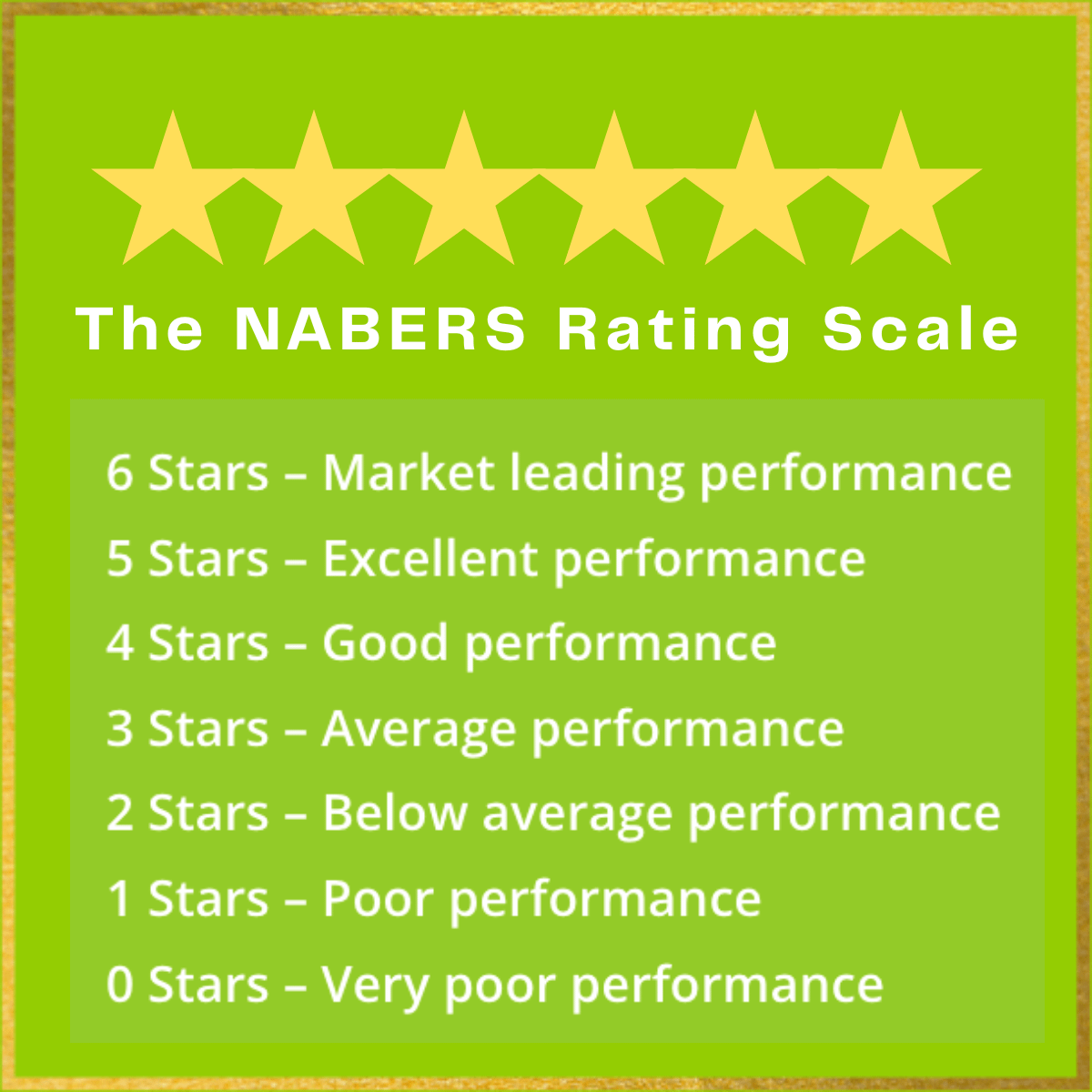
From June 2020, NSW government offices were required to hold a minimum 5-star NABERS Energy rating under the Government Resource Efficiency Policy. The NSW policy register now lists that policy as archived. The operative policy is the Net Zero Government Operations Policy, published in December 2024 and covering 2024-25 to 2029-30, which requires 5.5 stars by June 30, 2026 and 6 stars by June 30, 2030, statewide.
The obligation sits with the agency, which must achieve and maintain the rating in the offices it owns and leases. That is a procurement rule, not an investment mandate. It still decides who can lease your building.
Here is what a full star costs when the tenant pool, rather than the rent, is what moves.
Market Signal
Australia has done something few markets have. It made building energy performance a measured, published, comparable number, and then attached consequences to it.
NABERS rates a building’s actual measured energy use, not its design intent, on a scale of 1 to 6 stars. Because it measures operation rather than specification, a building’s rating moves with how it is run, and it can fall.
The consequence that matters commercially is procurement. The NSW Government Resource Efficiency Policy required government offices in Sydney, Newcastle and Wollongong to hold at least a 5-star rating. The Net Zero Government Operations Policy set a statewide threshold of 5.5 stars that all new and existing government-owned and leased office buildings above 1,000 square meters of net lettable area had to have met by June 30, 2026. New buildings and fit-outs above AUD$10 million carry a separate minimum Green Star requirement under the same policy.
Government is a large, creditworthy, long-lease tenant. Removing it from your addressable market is not a rent discount. It reduces the number of counterparties that can sign.
The disclosure layer arrived alongside it. Australia adopted AASB S1 and S2, phased by entity size. AASB S2 applies to annual reporting periods beginning on or after January 1, 2025, so for a 30 June balancer the first Group 1 report is FY2025-26—Group 2 entities report for FY2026-27, and Group 3 for FY2027-28.
That phasing matters to a landlord because it determines when your tenant begins publishing the space’s climate characteristics. A Group 1 corporate tenant has already completed its first reporting period. Its leased-asset disclosure is a public document describing your building.
Underneath both sits the physical driver, and in Sydney it is unusually geographic. Western Sydney runs hotter than the coast, with temperatures up to 6 to 10°C higher than the east during extreme events, according to Sydney Water’s study.
That spread is large enough that two offices in the same metropolitan market face materially different cooling loads and therefore different measured energy use and, in turn, different NABERS ratings for an identical plant.
In other words, the rating is not location-neutral. A building in Parramatta has to work harder than an identical building in the CBD to reach the same star.
Deal Scenario
The following is a modeled composite in which a full-star rating gap is applied to tenant eligibility rather than to rent, with upgrade cost and timing held constant as variables.
A Western Sydney office asset, institutional-grade, currently rated 4.5 stars on NABERS Energy.
On paper, the gap to the operative 5.5-star threshold is a full star, and 1.5 stars to the 6-star step in 2030. In the leasing market, it is the difference between qualifying for government tenancy and not qualifying.
The upgrade scope in a building of this vintage runs to plant controls, lighting, metering, and tuning. A full star generally needs plant replacement and envelope work alongside them, so this is a program measured in quarters rather than months, and the cost is deal-specific.
Now run it three ways, because the interesting part is that the rent line barely moves in any of them.
Do nothing. The asset continues to lease to the private tenant market. Rent holds. What changes are the depth of the bid at each renewal and the fact that a category of tenant with the longest leases and the best covenants is structurally unavailable.
Upgrade before a lease event. The capital goes in during a vacancy, which is the cheapest time to do this work. The building becomes eligible for government tenancy, and that eligibility is most valuable when you have space to fill.
Upgrade tenant-in-place. Considerably more expensive, disruptive, and often requiring rent abatement. This is the version most owners end up in, because the trigger to act arrives when a specific deal is lost rather than when the calendar suits.
The economics of the upgrade depend on when it happens, not what it costs. A rating gap is cheap to close at the right moment and expensive at the wrong one, and the June 30, 2026 date has already passed.
The exit is where it compounds. A buyer underwriting this asset in year five is pricing the tenant pool they will inherit, and the rating is a published, verifiable number they can look up before they bid. There is no information asymmetry to exploit here.
NABERS adds a wrinkle that doesn’t exist under a design-based standard. Because the rating measures actual metered consumption, it moves with tenant behavior.
A tenant that extends operating hours, densifies its floor plate, or installs equipment the base building was not sized for will increase consumption, and the rating will fall even though the landlord changed nothing. The reverse is also true. Hybrid working has quietly improved some ratings for reasons unrelated to the building.
For an owner, this turns the rating into a shared variable rather than a property attribute. It is worth knowing whether a 5-star rating was earned by good plant or by low occupancy, because only one of those survives a full lease-up.
Underwriting Analysis
The diligence question is not what the building is rated. It is what the building is rated relative to the thresholds that govern its tenant market, and how stable that rating is.
Get the rating history, not the current star rating. NABERS measures actual use so that a rating can drift down due to occupancy changes, plant degradation, or a hot year. A 5.5-star asset that has been trending down for three cycles is a 5-star asset that has not yet been remeasured.
Identify the thresholds that bind in your specific market. The operative statewide requirement was 5.5 stars by June 30, 2026, rising to 6 stars by June 30, 2030. Under the Government Resource Efficiency Policy, the city split applied only to leased offices, with owned offices carrying the requirement across all of NSW. The Net Zero Government Operations Policy carries no city split at all.
Ask what the building would rate after a hot summer. Western Sydney’s heat differential means cooling load isn’t constant. A rating achieved in a mild year is a weaker asset than the same rating achieved in a hot one.
Read the anchor tenant’s climate disclosure. Under AASB S2, a Group 1 tenant has completed its first reporting period. If its report identifies leased-space energy performance as a transition risk, you are reading the rationale for its own renewal decision.
The timing of the upgrade relative to lease expiry matters more than its cost. Same scope, same works, and the delivered cost can differ by a multiple depending on whether the floor is empty. Model the lease calendar first, then the capex.
Strategic Implications
A broader pattern exists across jurisdictions. A performance standard converts a gradient into a threshold, and thresholds do not behave like prices.
Brief 15 found it in the Netherlands, where a national label C prohibition had brought 78% of Dutch office floor area into compliance by July 1, 2024. That obligation took effect on January 1, 2023, against a rule set in 2018. Brief 19 found it in Arizona, where an agency stopped issuing water determinations and a category of land ceased to be developable. Sydney is the same mechanism wearing a different instrument.
In every case, the asset below the line is not discounted. It is excluded from a set of counterparties, and exclusion is invisible in comparable sales because the bid that was never made leaves no record.
For portfolio construction, the practical rule is to know, for every asset, which thresholds apply and where you sit relative to each. That is a short list per building, and almost nobody maintains it.
There is also a point worth making about positioning, because the defensive framing undersells it. A rating threshold creates a protected tenant market for whoever clears it. If government tenancy in your submarket requires 5 stars and half the competing stock sits below that threshold. Buildings above the line compete for that demand against a deliberately restricted field.
That is worth more than the rent premium and is more durable because the restriction is written into someone else’s procurement policy rather than market sentiment.
Future Signal
Watch these four things -
Whether the NABERS threshold ratchets. Standards of this kind tend to tighten once the market clears them, and the Dutch experience suggests the cheap tranche of compliance gets taken first. It already has: the Net Zero Government Operations Policy set 5.5 stars from June 30, 2026 and 6 stars from June 30, 2030, and each step is considerably more expensive per building than the last.
Whether private tenants adopt the government threshold, procurement rules often become market conventions once enough space is built to them. If large corporate tenants start writing a NABERS minimum into their own requirements, the addressable market for sub-threshold buildings narrows again without any regulatory change.
Whether the heat differential starts appearing in ratings analysis. A heat penalty of that size is a structural handicap for Western Sydney stock, and it is not currently accounted for. If NABERS or the market began normalizing for climate zone, the relative position of a large amount of suburban office space would change overnight.
Whether ratings begin to move in response to tenant behavior visibly. As offices continue to return to full capacity after the hybrid adjustment, some buildings will lose their rating solely due to rising occupancy. If that happens at scale, it will complicate the market’s read of what a star actually signals, and it will catch owners who bought a rating rather than a building.
The through-line is that, in a market with a published performance standard, the number reflects work that rent and cap rate cannot capture. It determines who can be your tenant, and that is upstream of everything a valuation measures.
As always, KNOW YOUR SIGNALS and BE CLIMATE READY!
Jamie
Run this on your own deal
The CRDF Deal Stress Test™ built for this brief takes an asset near a performance threshold and tests the upgrade against lease timing rather than against rent. Free, no signup: Brief 20 CRDF Deal Stress Test™ (xlsx)
New to the framework? The blank master Signal Tracker and Deal Stress Test workbooks are at climatereadyre.com/tools.
Related briefs
Same signal (S8 Disclosure, Taxonomy & Regulatory Regimes):
Brief 15 · The Netherlands Label C Rule: How a Deadline Moved a Market to 78% Compliance
Brief 12 · Climate Disclosure Rules for Real Estate in 2026: CSRD, SB 253, and What Changed
Brief 8 · Office Overheating Risk and Valuation: What 40.3C Does to a Cap Rate
Next in sequence:
Brief 21 · Resilience-Weighted Portfolio Construction for Pensions: Tokyo’s 2.6% - coming soon
Sources
Every figure above, with the date the data covers, the date it was published, and the date I verified it.
NSW NABERS Energy requirement for government offices — under the Government Resource Efficiency Policy, NSW government-owned and leased offices in Sydney, Newcastle and Wollongong had to hold at least a 5-star NABERS Energy rating from June 2020, and new builds above 1,000 sq m and AUD 10M project cost carried the same requirement; the Government Resource Efficiency Policy is listed as archived on the NSW policy register. The Net Zero Government Operations Policy, published December 2024 and covering 2024-25 to 2029-30, sets NABERS Energy base building and tenancy, or whole building, at 5.5 stars by June 30, 2026 and 6 stars by June 30, 2030 for all new and existing government-owned and leased office buildings above 1,000 square meters of net lettable area.
NSW Government — Net Zero Government Operations Policy · Data as of 2024-25 to 2029-30 · Published Dec 2024 · Accessed Sep 2026
The requirement lives in the NSW government operations policy, not in the NABERS ratings scheme itself. The register records the earlier policy as archived, and the later one is operative. This is a government tenancy and procurement requirement, not an investor mandate; the effect on owners runs through the tenant pool.
Australian climate disclosure phasing — AASB S1 and S2 apply to annual reporting periods beginning on or after January 1, 2025; a 30 June balancer in Group 1 first reports FY2025-26, Group 2 from FY2026-27, Group 3 from FY2027-28.
Australian Accounting Standards Board — AASB S2 Frequently Asked Questions · Data as of 2025–2028 · Published date not stated · Accessed Sep 2026
The first reporting year depends on the entity’s balance date. FY2025-26 is the Group 1 case for a 30 June balance date.
Dutch label C office compliance — 78% of Dutch office floor area met the label C obligation as of July 1, 2024; a year earlier, at July 1, 2023, the figure was 72%. The obligation took effect on January 1, 2023, against a rule set in 2018.
RVO (Netherlands Enterprise Agency) — Energielabel C kantoren · Data as of Jul 1, 2024 · Published date not stated · Accessed Sep 2026
A national Netherlands figure, not an Amsterdam one, measured on office floor area.
Western Sydney heat differential — up to 6 to 10°C higher than eastern Sydney during extreme events.
Sydney Water — Cooling Western Sydney · Data as of 2017 · Published 2017 · Accessed Sep 2026
Reported differentials vary by method and by whether air or surface temperature is measured. The 6 to 10°C figure is for extreme events, not typical days.
NABERS in sustainable finance — ratings used as third-party validation in green and sustainability-linked lending.
NABERS — NABERS Energy · Data as of 2024–2026 · Published date not stated · Accessed Aug 2026
Directional. No basis-point pricing benefit is claimed here; documented UK mid-market sustainability-linked ratchets run 2.5 to 15 basis points.
Western Sydney office at 4.5 stars — full-star gap to the operative 5.5-star threshold, and 1.5 stars to the 6-star step in 2030, with upgrade cost and lease timing as the variables.
CRREI modeled composite · Method: rating gap applied to tenant eligibility rather than to rent, upgrade cost treated as deal-specific and timing-dependent · Data as of 2026 · Published Sep 2026 · Accessed Sep 2026 · Modeled — not a specific asset
Commentary and analysis only. Not investment, financial, legal, tax, or professional advice. CRDF tools are illustrative; examples are composites drawn from public data. Do your own due diligence and consult qualified professionals.
I run this analysis on specific deals. If you hold an asset near a performance threshold and want to pressure-test upgrade timing and tenant-pool assumptions before you commit, book 20 minutes.
Jamie Wolf, MBA — Founder & Publisher, Climate-Ready Real Estate Investing, © 2026, CR REI Holdings LLC