

Signals: S12 Resilience Economics & Retrofit · S4 Valuation & Appraisal Gap · S3 Capital Allocation Flows
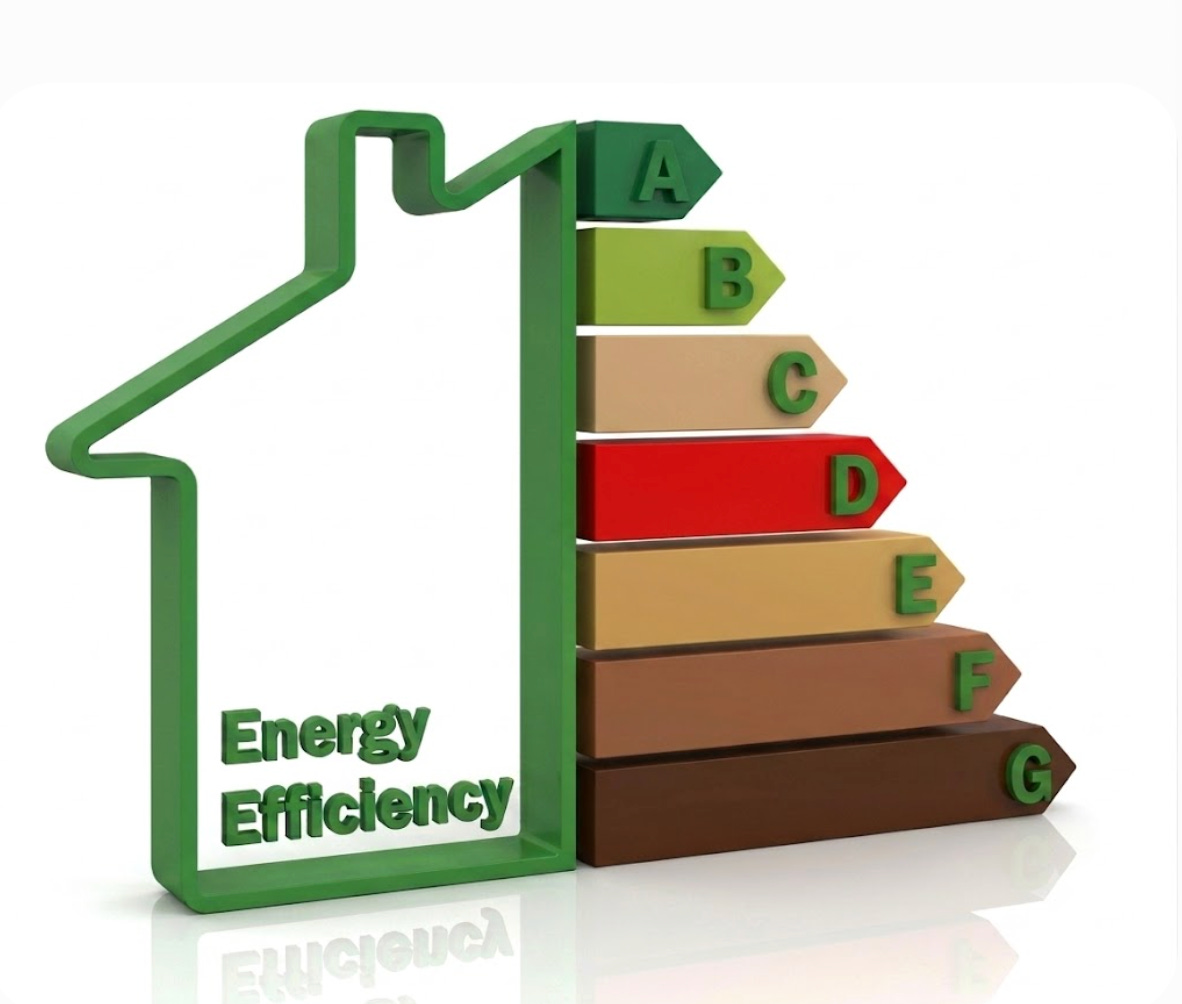
On January 1, 2023, it became illegal to let a Dutch office above 100 square meters without an energy label of C or better.
In mid-2021, eighteen months before the deadline, Colliers counted roughly 27.5 million square meters of office space that did not meet the requirement.
As of 1 July 2024, 78% of Dutch office floor area complied. That is the part of the story worth studying because most markets facing the same rule are still debating whether it will happen.
The Moment
The rule itself is unusually blunt. It’s not a tax, a disclosure obligation, or a subsidy. It’s a prohibition. An office below label C cannot legally be let, and a municipality’s enforcement remedy includes ordering the building to be taken out of use.
That structure matters more than the stringency. Label C is not a demanding standard. What made it bite was that it converted a gradient into a threshold, and thresholds behave differently from incentives.
An incentive produces a distribution of responses. Some owners act, some do not, and the market absorbs the difference through price.
A prohibition produces a binary.
The asset is either lettable or not, and an unlettable office is not a discounted office. It is a liability with a maintenance bill.
Colliers’ pre-deadline analysis found that roughly 27.5 million square meters did not meet the requirement. The composition is the interesting part. In mid-2021, about 10% of office floor area held a label below C and about 38% had no energy label at all. Roughly half the stock was compliant. By 1 July 2024, the unlabeled share had fallen to about 12% of floor area.
Most of the exposure sat there. Most of the non-compliant stock wasn’t failing the standard. It was undocumented.
The Story
What happened next?
As of 1 July 2024, 78% of Dutch office floor area met the standard, up from 72% a year earlier. The national office market moved from a mid-2021 baseline of 27.5 million non-compliant square meters to 78% compliance by floor area as of 1 July 2024, against a rule announced years in advance and enforced by prohibition.
Much of that movement was administrative rather than physical. Buildings that had already performed at label C or better had simply never been assessed. Registering a label is cheap. Retrofitting a building is not.
That distinction is the practical lesson for anyone facing UK MEES or the EU’s national minimum standards. The first tranche of apparent non-compliance is usually a documentation problem, and it resolves quickly and cheaply once a deadline is credible. The residual is the real retrofit population, and it is smaller than the headline number suggests but far more expensive per square meter.
Underwriting the headline number will overstate the capital requirement. Underwriting only the documented failures will understate it. The work is in separating the two, and it can be done from a label registry before an offer is made.
Demand moved at the same time, which complicates the picture. Amsterdam office vacancy rose from 6.9% in 2023 to 9.3% in 2024. That was not weakening demand. New high-quality space was delivered, tenants relocated into it, and the buildings they left sat empty for a period.
The label did not show up in rents. Eichholtz, Kok and Sun, studying Dutch label and transaction data from 2010 to 2023, found rental rates essentially unchanged after the policy was announced, with a statistically insignificant coefficient of 0.018 for compliant buildings, because tenants carry no compliance duty and staggered long leases delay adjustment. It showed up in prices instead. Compliant offices transacted about 21.8% higher after formal adoption, while label G offices carried a 51.1% discount.
The cost side of that compliance is where the Dutch experience gets less quotable and more useful.
Moving a building from an F or G label to a C label generally involves upfitting the lighting, controls, glazing, and insulation. It is disruptive, measured in months rather than years, and can be phased around lease events.
Moving from a C to an A is a different exercise entirely. It usually means plant replacement and envelope work, and the payback depends on modest energy savings at Dutch commercial tariffs. That is why the market clustered at C rather than overshooting it.
Owners did the minimum the law required and stopped, which is the rational response to a threshold and the reason a threshold produces a compliance rate rather than a performance distribution. It is also why the next ratchet, when it comes, will be more expensive per building than this one was.
Anyone modeling a future standard should assume the cheap tranche has already been taken.
Structural Forces
Three forces determine whether the Dutch outcome transfers to other markets.
First, the deadline was credible. The rule was legislated well in advance, the enforcement mechanism was specified, and the remedy was severe enough to be unambiguous. Owners responded because ignoring it meant losing the entire income stream.
Compare that to a standard with a distant date, an open consultation, and no named enforcement authority. Owners rationally wait, because waiting is free until it is not.
Second, the same architecture is now spreading. The EU’s recast Energy Performance of Buildings Directive requires member states to renovate the worst-performing 16% of non-residential buildings by 2030 and 26% by 2033.
More immediately, EU member states were required to transpose the recast Energy Performance of Buildings Directive (EPBD) by May 29, 2026. On July 15, 2026, the European Commission opened formal infringement proceedings against all 27 EU member states for failing to fully transpose the directive into national law and notify the Commission by the required date.
Note the design and intent. The EU sets the stock percentage, and each member state defines the threshold that captures it. That means the standard is calibrated to national building stock rather than to an absolute performance level, and it ratchets automatically as the stock improves.
The UK is running the same logic through MEES. The government’s interim response of June 18, 2026 proposes EPC B by 2031 for non-domestic buildings over 1,000 square meters, where cost-effective, and drops the interim EPC C milestone.
New York does it through emissions rather than labels. Local Law 97 applies caps to most buildings above 25,000 gross square feet, with penalties for exceedance: a different instrument, but the same conversion of a gradient into a threshold.
The third force is that capital is pricing the threshold, not the gradient. Under the EU’s Sustainable Finance Disclosure Regulation, an Article 9 fund must show that what it holds meets the sustainable-investment test, including do-no-significant-harm; Taxonomy alignment is disclosed rather than gated. An asset that cannot clear it isn’t cheap for that buyer. It is ineligible.
That is what turns a building code into a valuation event. The discount on a non-compliant asset is not the cost of the retrofit. It is the cost of the retrofit plus the value of the buyers who cannot bid until it is done.
Next Chapter
Watch whether other jurisdictions copy the enforcement mechanism or only the target.
Targets are easy to announce and easy to postpone. The Dutch result came from a prohibition with a named remedy, and a disclosure requirement or a tax has yet to produce a comparable outcome.
For an owner, the practical sequence is short and can be run before an offer.
Pull the label registry for the asset and the submarket—separate genuinely underperforming buildings from unlabeled ones. The second group is a documentation cost. The first is a capital program.
Find the enforcement mechanism, not the deadline. A standard with no named authority and no specified remedy will slip. A prohibition will not.
Price the buyer pool, not only the retrofit. Ask which funds can hold the asset in its current state. If the answer excludes Article 9 mandates, the exit is narrower than the comps suggest.
Check whether the retrofit is on the critical path for a lease event. Compliance work during a tenant-in-place period costs considerably more than the same work between leases, and the deadline may not align with your rent roll.
The Dutch case also establishes one more point that is easy to miss. The rule applies to letting, not to ownership or sale. An owner could continue to hold a non-compliant building indefinitely. They could not collect rent from it.
That is a precise and deliberate design choice. It places the obligation where the asset generates income, when an owner has both the motive and the cash flow to act. A standard attached to sale would have frozen transactions. A standard attached to ownership would have produced litigation.
If you are trying to predict which proposed standards will actually bind, look at where in the asset’s life the obligation attaches. Letting is the pressure point.
The broader read is that the most powerful climate instrument acting on real estate right now is not a carbon price or a disclosure regime. It is a building standard with a prohibition attached, because that is the only version that produces a compliance rate rather than a distribution.
The Netherlands demonstrated that a national office market will move most of the way in about three years when the alternative is losing the right to collect rent. That is a faster response than any incentive has produced anywhere, and it is the model from which the next set of standards is being written.
Brief 14 showed the same repricing arriving through an insurance market rather than a statute.
Brief 16 follows the capital that is positioning ahead of standards like these.
As always, KNOW YOUR SIGNALS and BE CLIMATE READY!
Jamie
Go deeper
This is a Story & Future Thinking brief, so there is no companion workbook. The blank master CRDF Signal Tracker and Deal Stress Test are free and available at climatereadyre.com/tools.
Related briefs
Same signal (S12 Resilience Economics & Retrofit):
Brief 13 · GRESB Participation and Real Estate Returns: What $9 Trillion in Capital Screens For
Brief 3 · Hoboken Property Values: The Impact of $230M Post-Sandy Flood Infrastructure
Brief 29 · Wildfire Retrofit Cost vs Insurance Discount: What $23K to $100K Actually Buys - coming soon
Next in sequence:
Brief 16 · Private Equity Real Estate Climate Strategy: Brookfield’s $23.5B Fund - coming soon
Sources
Every figure above includes the date the data covers, the publication date, and the date I verified it.
The label C obligation — offices above 100 sq m must hold EPC label C or better to be legally let, effective January 1, 2023.
RVO, Netherlands Enterprise Agency — Energielabel C kantoren · Data as of 2023 · Published 2023 · Accessed Aug 2026
Rijksoverheid — Steeds meer kantoren met minimaal energielabel C · Data as of 2024 · Published Oct 2, 2024 · Accessed Sep 2026
Pre-deadline non-compliance — roughly 27.5 million sq m of office space did not meet the minimum requirement.
Flexas — Obligatory energy label C for offices: here’s what you need to know · Data as of Jun 2021 (Colliers) · Published Dec 9, 2025 · Accessed Sep 2026
Composition of the non-compliant stock — in mid-2021, about 10% of office floor area did not have energy label C or better and about 38% had no energy label at all; RVO put the unlabeled share at about 12% of floor area by 1 July 2024.
Flexas — Obligatory energy label C for offices: here’s what you need to know · Data as of Jun 2021 (Colliers) · Published Dec 9, 2025 · Accessed Sep 2026
Flexas is a commercial office brokerage platform that relays Colliers’ analysis, which the Dutch trade press reported on June 16, 2021. The same page states the January 1, 2023 compliance date, the 225 kWh per square meter per year threshold, and that non-compliant offices can no longer be rented out.
Post-deadline compliance — as of 1 July 2024, 78% of Dutch office floor area met the standard, up from 72% as of 1 July 2023; about 10% sat at labels D to G, and about 12% held no label.
Rijksoverheid — Steeds meer kantoren met minimaal energielabel C · Data as of Jul 1, 2024 · Published Oct 2, 2024 · Accessed Aug 2026
Two different moments. The 27.5 million square meter figure is Colliers’ mid-2021 baseline. The 78% is the government’s floor-area measure as of 1 July 2024, up from 72% a year earlier.
Amsterdam office vacancy and label-linked rent growth — vacancy rose from 6.9% (2023) to 9.3% (2024); the Cushman & Wakefield release carries no rent data split by energy label, and the peer-reviewed evidence finds no rent effect.
Cushman & Wakefield Netherlands — Worsening scarcity of offices in prime locations · Data as of 2024 · Published Jan 13, 2025 · Accessed Aug 2026
Savills Netherlands — Savills research shows occupiers willing to pay more for sustainability · Data as of period not stated · Published date not stated · Accessed Sep 2026
CBRE Netherlands — Sustainability Offices Report · Data as of period not stated · Published date not stated · Accessed Sep 2026
Nature Communications — Eichholtz, Kok & Sun, The impact of minimum energy performance standards on the commercial real estate market, 17:4038 (2026) · Data as of 2010–2023 · Published Mar 16, 2026 · Accessed Sep 2026
The increase in vacancies reflects new supply and tenant relocations, not weakening demand. The label is capitalized into transaction prices rather than rents. Eichholtz, Kok and Sun, Nature Communications 17:4038 (2026), find compliant offices about 21.8% higher and label G offices at a 51.1% discount over 2010 to 2023. The study contrasts compliant with non-compliant and reports label G separately. It does not split A from B from C.
EPBD recast requirements — member states must renovate the worst-performing 16% of non-residential buildings by 2030 and 26% by 2033; on July 15, 2026, the European Commission opened formal infringement proceedings against all 27 EU member states.
European Commission — Energy Performance of Buildings Directive · Data as of 2024 · Published May 28, 2024 · Accessed Aug 2026
European Commission — Commission calls on EU countries to transpose reinforced rules on the energy performance of buildings · Data as of 2026 · Published Jul 15, 2026 · Accessed Sep 2026
eubac — EPBD transposition: the Commission launches infringement procedures against the 27 member states · Data as of 2026 · Published date not stated · Accessed Sep 2026
The UK’s MEES regime moved on June 18, 2026. The government’s interim response proposes EPC B by 2031 for non-domestic buildings over 1,000 square meters, where cost-effective, and drops the proposed 2027 EPC C milestone.
New York Local Law 97 — emissions caps apply to most buildings above 25,000 gross square feet.
City of New York — Local Law 97 · Data as of 2024 · Published 2024 · Accessed Aug 2026
SFDR Article 9 Taxonomy gate — Article 9 products must demonstrate that holdings meet the Article 2(17) sustainable-investment test, including DNSH; Taxonomy alignment is a disclosure obligation under the Taxonomy Regulation, not the SFDR gate.
European Commission — Sustainability-related disclosure in the financial services sector · Data as of 2024–2026 · Published 2026 · Accessed Aug 2026
Commentary and analysis only. Not investment, financial, legal, tax, or professional advice. CRDF tools are illustrative; examples are composites drawn from public data. Do your own due diligence and consult qualified professionals.
I run this analysis on specific deals. If you hold assets facing a minimum-standard deadline and want to pressure-test the retrofit scope and buyer pool before you commit, book 20 minutes.
Jamie Wolf, MBA — Founder & Publisher, Climate-Ready Real Estate Investing, © 2026, CR REI Holdings LLC