

Signals: S1 Insurance Repricing · S9 Zoning, Codes & Land Use · S12 Resilience Economics & Retrofit
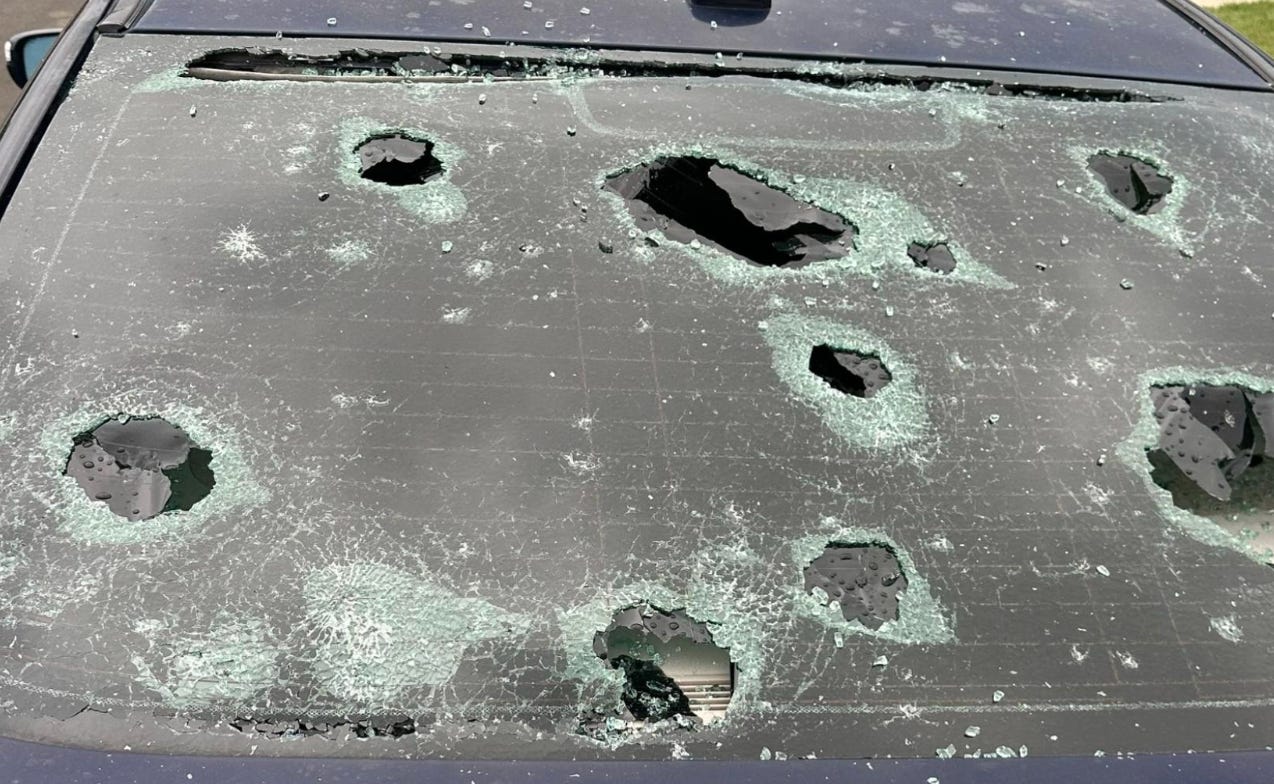
Photo Credit: Briana Fernandez
Colorado has just legislated a 0.5% fee on multiperil homeowners premiums, with at least 85% of the revenue going to hail and wind retrofit grants, and a new requirement that insurers report what they actually credit for a resilient roof.
That reporting requirement is the tell. The state is legislating to find out what the discount is, which means nobody currently knows.
If you are modeling a Class 4 roof upgrade against a premium discount, you are modeling a number that is not published anywhere in the country.
Market Signal
Two Colorado statutes changed the ground under this decision within fourteen months, and both are routinely cited incorrectly.
The first is House Bill 25-1182, signed May 28, 2025, creating a new section of the insurance code. It requires that where an insurer does not build property-specific and community-level mitigation into its models, the insurer “shall provide discounts to policyholders who can demonstrate that property-specific mitigation actions have been undertaken on the property.” It took effect July 1, 2026.
The requirement is conditional, biting only where the carrier has not already modeled mitigation. It triggers on a wildfire risk model, catastrophe model, or scoring method. And it prescribes no discount size at all.
The second is Senate Bill 26-155, signed June 4, 2026, and effective August 12, 2026. Its title is “Increase Access Homeowner’s Insurance Enterprise,” and it creates the Strengthen Colorado Homes Enterprise, a government-owned business within the Division of Insurance.
From calendar year 2027, the enterprise levies a fee equal to 0.5% of the total multiperil homeowners premium an insurer collected in the immediately preceding calendar year. At least 85% of that revenue must fund grants to Colorado homeowners retrofitting residential property against hail and windstorm loss.
Three qualifiers matter and are almost always dropped.
The fee is capped at $100 million per year for the first five years.
It may not be passed through to policyholders.
And the reporting duty begins “no sooner than January 1, 2027, and upon the commissioner adopting rules,” so it depends on rulemaking rather than being automatic.
The reporting is designed to collect the following: policies in force, the number of homes with a resilient roof system, the discount applied for one, wind and hail claim frequency, and the severity for homes with and without.
Colorado is about to publish the first systematic dataset on what a resilient roof is actually worth. Until it does, anyone quoting a percentage is quoting a carrier’s marketing or someone’s guess.
The geography justifies the effort. The Front Range sits inside Hail Alley, and the regional insurance association describes residents as able to “count on three or four catastrophic hailstorms every year,” defining catastrophic as at least $25 million in insured damage. The May 8, 2017 Denver metro storm remains the reference event at $2.3 billion, stated in nominal 2017 dollars.
Deal Scenario
Model a 96-unit garden-style multifamily asset in the Denver metro Hail Alley corridor, organized across eight buildings on a $19.2 million basis, with each building carrying a roof at the end of its useful life. This modeled scenario tests one decision.
At the reroof, the choice is a standard architectural shingle or a UL 2218 Class 4 impact-resistant shingle.
Note the standard’s definition, because the two most common shorthand phrases are wrong. UL 2218 is a steel-ball drop test that assigns a pass-or-fail class. The Insurance Institute for Business and Home Safety runs a different program entirely (here in my adoptive home state of South Carolina). It propels laboratory-manufactured hailstones at roofing products and reports graded, relative performance across dents, tears, and granule loss, “structured to distinguish relative performance” rather than to pass or fail.
IBHS built that protocol precisely because the UL class does not discriminate real-world hail performance. A Class 4 designation therefore does not confer, predict, or guarantee any particular IBHS rating. If you want both, you specify both, and you check the product on both lists.
No defensible public price series exists for a Class 4 upgrade. The figures that circulate trace to contractor lead-generation sites, and the Class 4 half of the comparison, which is the entire point, has no source at all. So take the delta from your own bids, and for the illustration assume $40,000 across the eight buildings, about 0.2% of basis. Replace it with your number. The argument below intentionally does not depend on the price.
Underwriting Analysis
There are four parts, in the order they decide which shingle type to use when you reroof.
First, the discount cannot carry the case, because the discount is not knowable. Colorado’s own legislature has just required insurers to begin reporting resilient-roof discounts, meaning the regulator does not currently collect them. HB25-1182 mandates that a discount exist in certain circumstances but sets no size. No filed schedule for multifamily hail mitigation exists anywhere in the United States.
So write the discount into the model as an unknown with a range you can defend to yourself, and then test whether the deal works at zero. If it only works at 30%, the deal is a bet on a number the state is currently trying to discover.
Second, the real return is claims frequency, and that is what the hail cannon exists to measure. IBHS built an impact protocol because roof performance under impact directly predicts claims frequency and severity. A roof that generates fewer claims produces a better loss ratio, and carriers renew better loss ratios.
On the benefit-cost side, use the right cell. The National Institute of Building Sciences puts private building retrofit at $4 per $1 nationally across all hazards, and above-code design at the same $4 per $1. The widely repeated $13 per $1 is the seismic retrofit figure, and no hail-specific published ratio exists. Treat $4 as an order-of-magnitude sense check on avoided loss, not as a hail return.
Third, the grants are coming, and they are bounded. From 2027, the Colorado enterprise directs at least 85% of a 0.5% premium fee to retrofit grants, capped at $100 million annually. That is real money arriving on a known date into a known peril, and it is the first item in this analysis with a statutory number attached. It is also a homeowner grant program, so check eligibility against your asset class before it enters a pro forma.
Fourth, and decisively, the ceiling is insurability, not price. As in the wildfire and hurricane-wind markets covered in earlier briefs, the case that ends the argument is not a bigger discount. It is non-renewal. A documented Class 4 roof, verified against a published performance rating and evidenced with a permit, a certificate, and a manufacturer’s record, is what keeps a Hail Alley asset insurable at all in the hardest-hit ZIP codes.
Run the sequence in that order, and the decision usually resolves before you reach the discount line, which is the point.
Strategic Implications
Build the paper trail, not the argument. From 2027, a Colorado insurer will file the discount it applied for a resilient roof. The owner who can produce the permit, the certification, and the installation record is the one whose credit appears in that filing. Documentation is the asset.
Specify to the peril your market actually has. Hail in Colorado is not wind in Alabama and is not fire in California. Each has its own standard, testing body, and state architecture, and none of the three benefit-cost ratios is interchangeable.
Watch the fee’s incidence, not just its size. SB26-155 bars the 0.5% from passing through to policyholders, making it a charge against carrier margin in a state where several carriers have already narrowed appetite. The second-order effect on availability is worth watching more closely than the grant program itself.
Assume the first published dataset changes the market. When Colorado publishes claim frequency and severity for homes with and without a resilient roof system, that becomes the first public evidence base for hail mitigation economics in the country. Whichever way it comes out, every model built on an assumed discount gets repriced against it.
Don’t let a manufacturer’s class stand in for a performance rating. Ask for the UL 2218 class and the IBHS impact rating separately, in writing, with the product name and version on each.
A wider shift underlies all of this. A design choice that used to be a voluntary underwriting credit is becoming state-tracked through reported rate factors, state-funded through a dedicated enterprise and, from 2027, state-audited through mandatory insurer reporting.
For an owner, that changes who the spec sheet conversation is with. It used to be one underwriter. Increasingly, it is the underwriter, the state regulator, and a future buyer’s diligence team, all reading the same public record.
As always, KNOW YOUR SIGNALS and BE CLIMATE READY!
Jamie
Run this on your own deal
The CRDF Deal Stress Test™ built for this brief lets you run your own roofing decision against insurability, valuation, and exit, with the discount deliberately exposed as an unknown you can set to zero and the avoided-loss ratio treated as a sense check rather than a return. Free, no signup: Brief 35_CRDF Deal Stress Test™ (xlsx)
New to the framework? The blank master CRDF Signal Tracker™ and Deal Stress Test™ workbooks are at climatereadyre.com/tools.
Related briefs
Same signal (S1 Insurance Repricing):
Brief 29 · Wildfire Retrofit Cost vs Insurance Discount: What $23K to $100K Actually Buys
Brief 26 · The True Cost of a FORTIFIED Roof: Insurance Savings & Storm Resilience
Next in sequence:
Brief 36 · Land Subsidence & Real Estate: Understanding the Property Appraisal Gap - coming soon
Sources
Every figure above includes the data coverage date, the publication date, and the date I verified it.
Colorado’s resilience enterprise — Senate Bill 26-155, signed June 4, 2026, and effective August 12, 2026, creating the Strengthen Colorado Homes Enterprise; a fee of 0.5% of the prior calendar year’s multiperil homeowners premium from 2027; at least 85% of revenue to hail and windstorm retrofit grants; capped at $100 million per year for five years; the fee may not be passed through to policyholders.
Colorado General Assembly, SB26-155 · Data as of 2026 · Published Jun 4, 2026 · Accessed Aug 2026
The bill’s title is “Increase Access Homeowner’s Insurance Enterprise”; Strengthen Colorado Homes is the enterprise it creates. The insurer reporting duty begins no sooner than January 1, 2027, and only upon the commissioner adopting rules.
Colorado’s mitigation discount requirement — House Bill 25-1182, signed May 28, 2025, effective July 1, 2026, requiring insurers that do not incorporate mitigation into their models to provide discounts to policyholders who demonstrate property-specific mitigation
Colorado General Assembly, HB25-1182 signed act · Data as of 2025 · Published May 28, 2025 · Accessed Aug 2026
Conditional, triggered by an insurer’s use of a wildfire risk model, catastrophe model, or scoring method, and it sets no discount percentage.
Hail Alley frequency and the reference event — three or four catastrophic hailstorms per year on the Front Range, catastrophic defined as at least $25 million in insured damage; the May 8, 2017 Denver metro storm at $2.3 billion
Rocky Mountain Insurance Information Association · Data as of 2018 · Published undated · Accessed Aug 2026
An insurance trade association, and the page’s most recent data point is 2018. The $2.3 billion figure is in nominal 2017 dollars, and its status as the state record has not been re-verified against a current source.
The two hail standards differ: UL 2218 assigns an impact class by steel-ball drop, while the IBHS protocol propels laboratory-manufactured hailstones and reports graded performance across dents, tears, and granule loss.
Insurance Institute for Business and Home Safety, impact resistance test protocol for asphalt shingles · Data as of 2026 · Published current · Accessed Aug 2026
IBHS is insurer-funded and describes its own program. UL’s own standard text could not be opened. A Class 4 designation does not confer an IBHS rating; the two are separate assessments.
Benefit-cost of retrofit — $4 saved per $1 for private building retrofit and $4 per $1 for above-code design, nationally across all hazards; no hail-specific published ratio exists
National Institute of Building Sciences, Natural Hazard Mitigation Saves: 2019 Report · Data as of 2019 · Published Dec 1, 2019 · Accessed Aug 2026
The widely repeated “up to $13 per $1” is the seismic retrofit cell and does not apply to a hail decision.
The absence of a published discount — no filed schedule for multifamily hail mitigation discounts could be located in any state, and Colorado is legislating to begin collecting the data from 2027
Colorado General Assembly, SB26-155 reporting requirement · Data as of 2026 · Published Jun 4, 2026 · Accessed Aug 2026
Stated as an absence rather than a figure. The reporting requirement shows the regulator does not currently hold this data.
The deal scenario — 96 units across eight buildings at a $19.2 million basis, with a Class 4 upgrade delta assumed at $40,000, about 0.2% of basis.
CRREI modeled scenario · Method: a single reroof decision applied to an unchanged pro forma, with the cost delta entered as a stated assumption because no defensible public price series exists, and the premium discount deliberately left as an unknown to be tested at zero · Modeled — not a specific asset
The cost delta is an assumption the reader replaces with their own bid. The brief’s conclusion does not rest on it.
Commentary and analysis only. Not investment, financial, legal, tax, or professional advice. CRDF tools are illustrative; examples are composites drawn from public data. Do your own due diligence and consult qualified professionals.
I run this analysis on specific deals. If you are pricing a reroof in Hail Alley against a discount nobody has published, book 20 minutes.
Jamie Wolf, MBA — Founder & Publisher, Climate-Ready Real Estate Investing, © 2026, CR REI Holdings LLC