

Signals: S10 Migration & Demographic Shift · S6 Chronic Climate Stress · S4 Valuation & Appraisal Gap
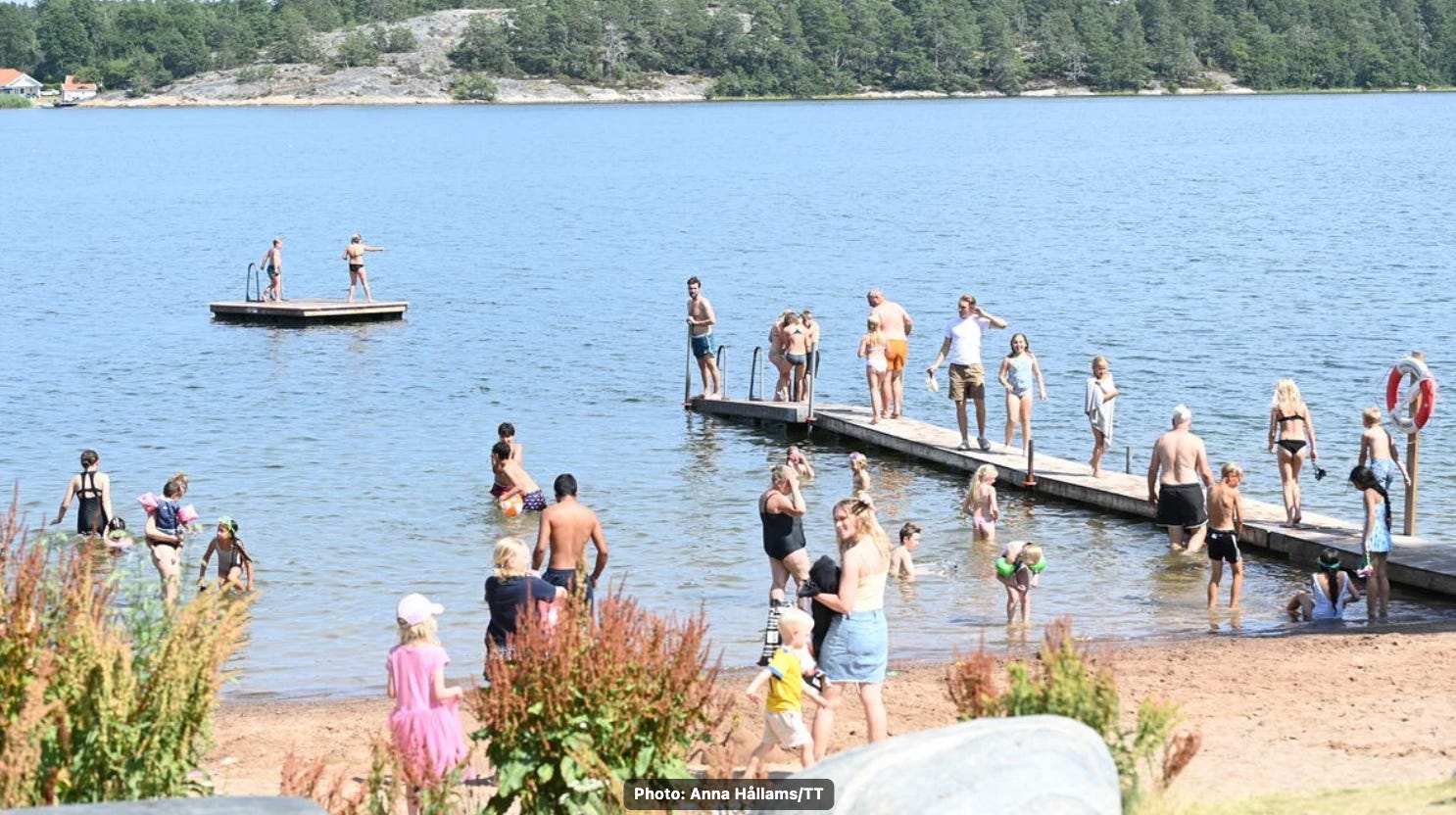
On Wednesday, we priced one hailstorm against a Dallas-Fort Worth apartment loan. Today we close the month in Europe, with the question everyone in hospitality has been asked this summer. Is extreme heat moving hotel demand north? The data gives a clear answer, and it isn’t what the headlines say.
The Moment
Heat costs a hotel owner money without breaking anything. In Padua this summer, the local hospitality association said more than 80% of about 600 member businesses reported turnover down around 20% during the heatwave, as terraces emptied and customers moved indoors. Those are restaurants and outdoor seating, and the figures are self-reported, but the same mechanism applies to hotels. Revenue is lost with no physical damage, no insurance claim, and no guest going anywhere else. Reuters reported a Moody’s estimate that the summer 2025 heatwaves cost Europe about €43 billion in lost economic output, against roughly €500 million in insured payouts.
That’s the loss. The capital is doing something else. Nordic hotel deals hit a record in 2025, and the people doing them credit weaker local currencies, revenue-based leases, and hotels that fill in both winter and summer. Cool summers aren’t on their list.
The heat itself is not in question. The Copernicus Climate Change Service is part of Copernicus, the European Union’s Earth observation program. It says western Europe had its warmest June on record in 2026. The month averaged 20.74 degrees Celsius, which is 3.06 degrees above the 1991 to 2020 June average, and beat the previous year’s record.
The Story
The media named the response the “coolcation,” meaning a summer vacation taken somewhere cooler. It’s built mostly on searches and surveys. In July 2026, TT, Sweden’s national news wire service, reported that searches from the UK for July and August stays in Sweden on Trivago, the hotel price comparison site, were up 57% on the year. Those are searches, though, not stays.
So what happened when people actually booked? On September 22, 2026, Spain’s national statistics office published its August 2026 hotel figures. August is the peak of the season, and this was one of Europe's hottest summers on record. Spanish hotels recorded 48.7 million overnight stays, up 1.4% on August 2025, and non-resident nights, meaning foreign visitors, rose 2.8%. The average daily rate (ADR), the average price paid for each occupied room, rose 7.3% to € 166.90. Revenue per available room (RevPAR), which divides room revenue by every room in the hotel, sold or empty, rose 7.0% to €133.10. In other words, foreign demand for Spain rose in the year’s hottest month, and each room earned more.
Eurostat, the European Union’s statistical office, says the EU set another record in 2025, with nearly 3.1 billion nights in tourist accommodation, up 2.2%. Spain alone took 513.6 million of them. In the first half of 2026, Ireland, Malta, and Slovakia were Eurostat’s biggest movers. That isn’t a north-south pattern at all.
The north is growing faster in percentage terms, but from a much smaller base. Statistics Norway counted 8,108,778 guest nights in July 2026, up 6.0%. Greece’s statistical authority counted 31.70 million overnight stays, up 2.0%. Restoring the base, Greece added 621,569 nights to Norway’s 458,987, or 1.35 times as many, in the month the northward story should be strongest.
And the north isn’t heat-proof. In July 2025, sub-Arctic Fennoscandia, meaning Norway, Sweden, and Finland north of 60 degrees latitude, had a 21-day heatwave, the longest on record for the region. A northern premium bets on cool summers.
Has demand moved north, then? Not in any booked measure, at least not yet. What has moved is price in the south, and capital in the north.
Structural Forces
So if the map isn’t moving, what is? I see four forces.
Force one: the season is stretching, not the map. In Spain in 2025, Eurostat’s monthly series show June nights grew 4.02% and September nights grew 2.24%. August grew only 1.22%. In other words, the peak month grew the slowest, and June grew 3.31 times as fast as August. That’s measurable in the country with the EU’s largest tourism base. It affects staffing, capital expenditure (capex), and the timing of covenant tests, the financial ratios a lender requires a borrower to meet.
There is a complication. In Spain, June 2026 fell 1.42%. Was that the heat? UN Tourism, the United Nations agency, recorded a 3% drop in global arrivals in June. It named Middle East flight disruptions, mixed consumer confidence, and elevated oil prices. Heat isn’t on its list. Easter also moved from April 20, 2025, to April 5, 2026, which pulled nights into March. So we don’t attribute the June 2026 decline to heat.
Force two: the growth is price, not volume. Spain’s August revenue per available room grew five times faster than its night count. In Greece, GBR Consulting, a hotel consultancy, says resort revenue per available room rose 11.2% in the second quarter, on occupancy up just 0.5%. ITEP, the Greek tourism research institute, put the average July nightly rate at €190, up from €168. That’s 13.1% more per room, with occupancy up one point. In other words, rate now drives the southern revenue base. Rate can reprice in a single season, while occupancy takes years to rebuild.
Force three: the concentration is the risk, not the location. Eurostat says 31.1% of all EU nights in 2025 fell in July and August. In Croatia, it was 54.5%; in Greece, 41.6%; and in Finland, 24.1%. In Croatia, August nights were 41.1 times January’s. So a Croatian resort earns more than half its year in two months, and the other ten months carry 45.5% of its revenue. Why does that matter to a lender? Heat doesn’t have to empty that hotel to threaten its loan. It only has to shave the peak and push revenue into shoulder weeks, the quieter weeks around high season when the hotel isn’t staffed, priced, or fully open.
Force four: heat isn’t an insured peril, so the loss stays with the owner. That €43 billion of lost output against €500 million of insured payouts is the gap. Swenja Surminski of Marsh, the global insurance broker, said heat itself isn’t a traditionally insured risk.
The market’s answer so far is parametric insurance, which pays out automatically when a measured index such as temperature crosses a set threshold, with no loss adjuster and no proof of damage. Aidan Kerr, who leads public sector solutions for the UK and Ireland at Swiss Re, told Reuters that parametric insurance “can really play a role.” So far the products are mostly in agriculture, and we found none written for a hotel’s peak-season revenue.
The Next Chapter
What did move north? Capital. Cushman and Wakefield, the real estate services firm, puts Nordic hotel transaction volume up 87% in 2025, to €2 billion. CBRE, a rival firm, reports a similar figure of €1.85 billion. Two brokers measuring one market in one year came out 8.1% apart. The direction isn’t in dispute. The number is.
Why are the buyers there?
At a Nordic investment panel, Christian Kielgast of Nordic Hotel Consulting credited the recent fall in local currencies. A weaker local currency makes the same hotel cheaper for a foreign buyer. Robin Stenlund of CapMan Real Estate, a Nordic investment manager, said urban hotels with revenue-based leases offer strong risk-adjusted returns. In a revenue-based lease, the operator’s rent rises and falls with the hotel’s revenue, so the owner shares in the upside.
Jasmine Hopkins of Savills called dual seasonality the differentiator. In other words, the hotel can fill rooms in both winter and summer. Colliers put hospitality at 2% of Nordic real estate deals in 2022 and 2023, and at 6% by 2025. Currency, lease structure, and an under-owned sector explain that deal flow without a thermometer.
Meanwhile, the south is still booking. Meliá, the Spanish hotel group, reported revenue per available room up 11.7% in the first half of 2026. It told the market its third-quarter bookings at its Spanish and other resorts were growing at double-digit rates. Its €7.5 million net loss came from €79.4 million of provisions on leaving Cuba. The loss has nothing to do with heat.
The movement operators actually describe is inside Spain. Stefan de Goeij of Cushman and Wakefield described a move from the concrete jungle cities toward coastal hotels. That’s a shift between assets in the same country and the same currency. For a city-hotel owner, I’d argue it’s worse news than a guest flying to Oslo.
Values haven’t moved either. HVS, a hotel valuation firm, says European hotel values rose 0.2% through 2025. That doesn’t mean nothing is happening. It’s evidence nothing has been priced yet. The appraisal gap this series has tracked since Brief 36 is now arriving in hotels.
Over the next 12 to 24 months, I expect southern hotel income to keep growing on rate. I expect the first stress to show up in shoulder weeks and covenant tests, not arrivals. I expect Nordic hotel pricing to keep rising on currency and lease structure, while demand grows from a small base. And I expect the first lender to ask for monthly revenue concentration at the asset level to set the terms for everyone else. I’ll also be watching the climate insurance alliance the European Commission said it will launch on September 16. By the EU’s own figures, only a quarter of the bloc’s climate-related losses are insured.
The Strategic Question
If you own or lend against a southern European resort, is your debt service earned in eight weeks that heat can shave? And does anyone in the deal know the number?
I suggest you evaluate the following:
First, ask for the monthly revenue split at the asset level. Eurostat publishes seasonality by country, but we found no European rule requiring a hotel owner to disclose it by asset. That makes it a diligence question.
Second, split the last three years of growth into rate and occupancy. An income line built on rate is more fragile than one built on filled rooms, whether or not a single guest ever moves north.
Third, if you’re buying in the north, price the asset on what the buyers themselves named. That means currency, revenue-based leases, and two seasons, not cool summers the Arctic has already shown it can’t promise.
Heat is real, and so is its cost. It just isn’t showing up where the headline says. It’s showing up in the price, in the calendar, and on the owner’s own balance sheet.
As always, KNOW YOUR SIGNALS and BE CLIMATE READY!
Jamie
Go Deeper
This is a Story & Future Thinking brief, so there is no companion workbook. The blank master CRDF Signal Tracker™ and Deal Stress Test™ are free and available at climatereadyre.com/tools.
Related briefs
Same signal (S6 Chronic Climate Stress):
Next in sequence:
Brief 49 · Migration Patterns Are Leading Indicators - coming soon
Sources
Every figure above includes the data coverage date, the publication date, and the date I verified it.
The Padua survey — more than 80% of about 600 hospitality businesses surveyed in Padua reported turnover down around 20% during the heatwave, as terraces and outdoor seating emptied.
APPE Padova, via Reuters and Claims Journal · Data as of Summer 2026 · Published Aug 17, 2026 · Accessed Sep 2026
A trade association’s survey of its own members. The turnover figures are self-reported, and they cover food, drink, and outdoor seating rather than hotel rooms. The mechanism carries the point, not the level.
The uninsured heat loss — a Moody’s estimate of about €43 billion of lost European economic output from the summer 2025 heatwaves, against roughly €500 million of insured payouts; Swenja Surminski of Marsh on heat as a risk that is not traditionally insured; Aidan Kerr of Swiss Re on parametric insurance.
Reuters, via Claims Journal · Data as of Summer 2025 · Published Aug 17, 2026 · Accessed Sep 2026
The Moody’s figure is a modeled estimate of lost economic output, not a measured hospitality loss. That we found no parametric product written for a hotel’s peak-season revenue is CRREI’s search result, not the article’s claim.
The heat — Western Europe’s warmest June on record in 2026, at 20.74 degrees Celsius, 3.06 degrees above the 1991 to 2020 June average, beating the record set in June 2025.
Copernicus Climate Change Service (C3S), implemented by ECMWF; Samantha Burgess, Strategic Lead for Climate · Data as of Jun 2026 · Published Jul 9, 2026 · Accessed Sep 2026
A climate measurement, not a tourism measurement. It establishes the heat and says nothing about demand.
The coolcation searches — Trivago searches from the United Kingdom for July and August stays in Sweden are up 57% on the year.
Sweden Herald (TT News Agency) - Sweden sees surge in travel interest as coolcation trend grows · Data as of Summer 2026 · Published Jul 25, 2026 · Accessed Sep 2026
Search interest, not stays. The platform figures cover searchers in the United Kingdom only.
Spain’s August — 48.7 million hotel overnight stays in August 2026, up 1.4%; non-resident nights up 2.8%; average daily rate up 7.3% to €166.90; revenue per available room up 7.0% to €133.10.
INE, Instituto Nacional de Estadística, Hotel Tourism Short-Term Trends (HOS/HPI/IPHS), August 2026, provisional data · Data as of Aug 2026 · Published Sep 22, 2026 · Accessed Sep 2026
Provisional data. Hotels only, so it excludes campsites and short-stay rentals and is not comparable line for line with Eurostat’s all-accommodation series.
The EU record — nearly 3.1 billion nights in EU tourist accommodation in 2025, up 2.2%; Spain 513.6 million.
Eurostat, dataset tour_occ_nim · Data as of 2025 · Published Mar 4, 2026 · Accessed Sep 2026
Nights actually spent, not intentions. Harmonized across member states under an EU tourism statistics regulation.
The first-half movers — EU nights up 1.7% in the first half of 2026; Ireland, Malta, and Slovakia recorded the highest growth.
Eurostat, dataset tour_occ_nim · Data as of Jan to Jun 2026 · Published Sep 1, 2026 · Accessed Sep 2026
Eurostat does not name Spain, Greece, Croatia, or the Nordic countries among the movers in this release.
Norway’s July — 8,108,778 guest nights in July 2026, up 6.0%.
Statistics Norway (SSB), accommodation statistics · Data as of Jul 2026 · Published Sep 3, 2026 · Accessed Sep 2026
Covers hotels, holiday dwellings, camping sites, and youth hostels, a broader definition than the Greek series it is compared with, which makes Norway look better. Norway sits outside the EU tourism statistics regulation, so it reports its figures separately.
Greece’s July — 31.70 million overnight stays in July 2026, up 2.0%.
ELSTAT, the Hellenic Statistical Authority, relayed by Euronews (Ioannis Karagiorgas) · Data as of Jul 2026 · Published Sep 22, 2026 · Accessed Sep 2026
Figures from ELSTAT, relayed by Euronews. Covers hotels, short-stay accommodation, and campsites.
The restored bases, growth ratios, and concentration shares — Greece added 621,569 July 2026 nights to Norway’s 458,987, or 1.35 times as many; Spain’s June 2025 nights grew 3.31 times as fast as August’s; Spain’s August 2026 revenue per available room grew five times as fast as its nights; the average Greek July rate rose 13.1%; Croatia’s August nights were 41.1 times January’s, and its other ten months carry 45.5% of the year; the two Nordic broker tallies differ by 8.1%.
CRREI modeled scenario · Method: CRREI arithmetic on the sourced figures. A year-earlier count is the published count divided by one plus the published growth rate, and the gain is the difference between the two. Growth ratios divide one published growth rate by another. The rate rise compares ITEP’s two euro figures; the Croatian ratio and shares are taken from Eurostat’s monthly nights, and the broker gap compares the two published volumes. · Modeled — not a specific asset
Ratios of published figures, not new measurements. Norway’s count covers more types of accommodation than Greece’s, and the Greek lead holds across the published rounding band, at 1.31 to 1.40 times. Country-level shares say nothing about any single hotel’s calendar.
The northern heatwave — a 21-day heatwave in sub-Arctic Fennoscandia in July 2025, the region’s longest on record, defined as Norway, Sweden, and Finland north of 60 degrees latitude.
Copernicus Climate Change Service and the World Meteorological Organization, European State of the Climate 2025 (published April 29, 2026) · Data as of Jul 2025 · Published Apr 29, 2026 · Accessed Sep 2026
One hot northern season is not a trend in either direction, and is not used as one.
The stretching season—Spain’s nights in all accommodation, 2024 to 2025 —grew 4.02% in June, 1.22% in August, and 2.24% in September.
Eurostat dataset tour_occ_nim (dissemination API), CRREI arithmetic · Data as of Jun 2024 to Oct 2025 · Published Sep 23, 2026 · Accessed Sep 2026
Eurostat data, CRREI arithmetic. All accommodation, residents and non-residents.
The June 2026 dip — Spain’s June 2026 nights in all accommodation fell 1.42% from June 2025.
Eurostat dataset tour_occ_nim (dissemination API), CRREI arithmetic · Data as of Mar to Jun 2026 · Published Sep 23, 2026 · Accessed Sep 2026
Three confounds. Easter moved from April 20, 2025, to April 5, 2026; the global June drop has named causes other than heat, and the most recent Eurostat months are provisional. Heat is not claimed as the cause.
The global June drop — a 3% drop in global arrivals in June 2026, with Middle East flight disruptions, mixed consumer confidence, and elevated oil prices named as drags.
UN Tourism, World Tourism Barometer, Volume 24 Issue 3, September 2026 · Data as of Jan to Jun 2026 · Published Sep 2026 · Accessed Sep 2026
The September 2026 barometer publishes no split between southern and northern Europe.
The Greek second quarter — resort revenue per available room up 11.2% in Q2 2026, with resort occupancy up 0.5%.
GBR Consulting, Greek hospitality industry performance, via Hospitality Net · Data as of Q2 2026 · Published Aug 3, 2026 · Accessed Sep 2026
A consultancy’s market aggregate. The sample and method are not published and are used for direction, as the source states in its own words, not for the level.
The Greek July rate — average nightly rate of €190 in July 2026, up from €168, on occupancy of 83.4%, up from 82.4%.
ITEP, Institute of Tourism Research and Forecasts, via KNEWS · Data as of Jul 2026 · Published Sep 12, 2026 · Accessed Sep 2026
A relay of a trade institute’s figures. The institute’s own release was not opened. The source also does not attribute June to heat.
The two-month concentration — 31.1% of all EU nights in 2025 fell in July and August; Croatia 54.5%, Greece 41.6%, Finland 24.1%.
Eurostat, dataset tour_occ_nim · Data as of 2025 · Published Jul 7, 2026 · Accessed Sep 2026
Country level, not asset level. No hotel’s own seasonality is published anywhere.
The Nordic deal record — Cushman & Wakefield puts Nordic hotel transaction volume up 87% in 2025, to €2 billion; CBRE puts the record at €1.85 billion.
Cushman & Wakefield via CoStar (Vladislav Vorotnikov); CBRE via Hospitality Investor · Data as of 2025 · Published Aug 12, 2026 · Accessed Sep 2026
Brokers’ own deal tallies on a small, lumpy base, where one or two portfolio trades move the year. Reliable as a direction, not as a level. CBRE’s figure is from the Hospitality Investor article linked in the next source.
The hospitality share and dual seasonality — Colliers puts hospitality at 2% of Nordic real estate deals in 2022 and 2023, and 6% by 2025; Jasmine Hopkins of Savills on dual seasonality as the differentiator.
Colliers and Savills, via Hospitality Investor · Data as of 2022 to 2025 · Published May 21, 2026 · Accessed Sep 2026
The geographic scope of the Colliers share is not stated beyond the article’s Nordic frame. Dual seasonality means winter and summer, not cool summers alone.
What Nordic buyers named — Christian Kielgast of Nordic Hotel Consulting on currency, and Robin Stenlund of CapMan Real Estate on revenue-based leases, at a Nordic investment panel on April 13, 2026.
CoStar, Terence Baker, Nordic investment panel · Data as of Apr 2026 · Published Apr 13, 2026 · Accessed Sep 2026
Practitioner statements at a conference panel, not measurements.
Meliá’s first half — revenue per available room up 11.7% in the first half of 2026; third-quarter bookings at Spanish and other resorts growing at double-digit rates; a €7.5 million net loss after €79.4 million of provisions on leaving Cuba.
Meliá Hotels International results, reported by Reuters via Hotel Online · Data as of H1 2026 · Published Jul 30, 2026 · Accessed Sep 2026
A relay of the issuer’s own half-year results. The loss comes from the Cuba exit, not from heat.
The move within Spain — Stefan de Goeij of Cushman & Wakefield on demand moving from cities toward coastal hotels.
CoStar, Vladislav Vorotnikov · Data as of Aug 2026 · Published Aug 12, 2026 · Accessed Sep 2026
Practitioner statements, not measurements.
Hotel values — European hotel values up 0.2% through 2025.
HVS, 2026 European Hotel Valuation Index, Sophie Perret and Maxime Gauthier · Data as of 2025 · Published Mar 16, 2026 · Accessed Sep 2026
A valuation adviser’s own index. The per-room method and city table sit behind a registration wall and were not opened.
The EU insurance alliance — The European Commission said on September 16, 2026, it will launch a climate insurance alliance; EU figures show only a quarter of the bloc’s climate-related losses are insured.
Reuters, Kate Abnett - EU to launch climate insurance scheme after summer of extreme weather · Data as of Sep 2026 · Published Sep 16, 2026 · Accessed Sep 2026
Announced, not yet launched. Read on Reuters-syndicated republications.
Commentary and analysis only. Not investment, financial, legal, tax, or professional advice. CRDF tools are illustrative; examples are composites drawn from public data. Do your own due diligence and consult qualified professionals.
I run this analysis on specific deals if you own or lend against a southern European resort; book 20 minutes.
Jamie Wolf, MBA — Founder & Publisher, Climate-Ready Real Estate Investing, © 2026, CR REI Holdings LLC