

Signals: S2 Credit & Mortgage Markets · S1 Insurance Repricing · S12 Resilience Economics & Retrofit
On June 18, 2026, the UK government published its interim response on Minimum Energy Efficiency Standards (MEES) for commercial property. The new target is EPC B by 2031 for buildings over 1,000 square meters, where cost-effective.
The interim EPC C milestone proposed for 2027 was dropped. The endpoint got harder, and the date was pushed forward. That combination changes how a climate-adjusted capital stack should be structured and removes the argument most sponsors used to justify building one.
Market Signal
Minimum Energy Efficiency Standards, known as MEES, set the floor below which a commercial property cannot be let (rented). The regime has been ratcheting up for a decade, and the market had been underwriting an EPC C obligation landing around 2027 or 2028. That obligation no longer exists.
The proposed position is a single step to EPC B in 2031, applying only to buildings above 1,000 square meters. Below that threshold, the standard remains at EPC E. Existing exemptions and cost-effectiveness tests remain in effect.
Three consequences follow, and they conflict to some degree.
The compliance cliff receded. A sponsor who bought a D-rated asset in 2024 on the basis that it would be unlettable by 2028 now has an extra three to four years. Urgency was doing a lot of the work in those models, and it is gone.
The eventual standard is stricter. B is not a lighting-and-controls upgrade in a 2005-vintage building. It is fabric, plant, and metering. Sponsors who scoped to C are scoped short.
A size threshold now decides whether the regime applies at all. At 1,000 square meters, roughly 10,760 square feet, the line runs straight through the small end of the industrial and office market. A multi-let estate can have units on both sides.
So the case for a climate-adjusted stack can no longer rest solely on a deadline. It has to rest on the economics, and that is a harder argument to make than it was even six months ago.
This brief runs the economics with the deadline removed, using an observed-market financing spread rather than the frequently referenced 50-basis-point greenium. Brief 22 sets out why that number does not withstand scrutiny.
Deal Scenario
The following is a modeled scenario rather than an actual transaction. Four of the eight entries in the Sources block below are CRREI modeled inputs, and two more are explicitly unsourced assumptions. Hence, a GBP14.5 million two-stack model rests on four openable external sources. Weight the conclusions accordingly.
Method: two capital stacks with identical assumptions, differing only in leverage, a ring-fenced certification reserve, and the exit capitalization rate. Financing spread taken at 25 basis points, which is observed market practice at the optimistic end, rather than an assumed 50.
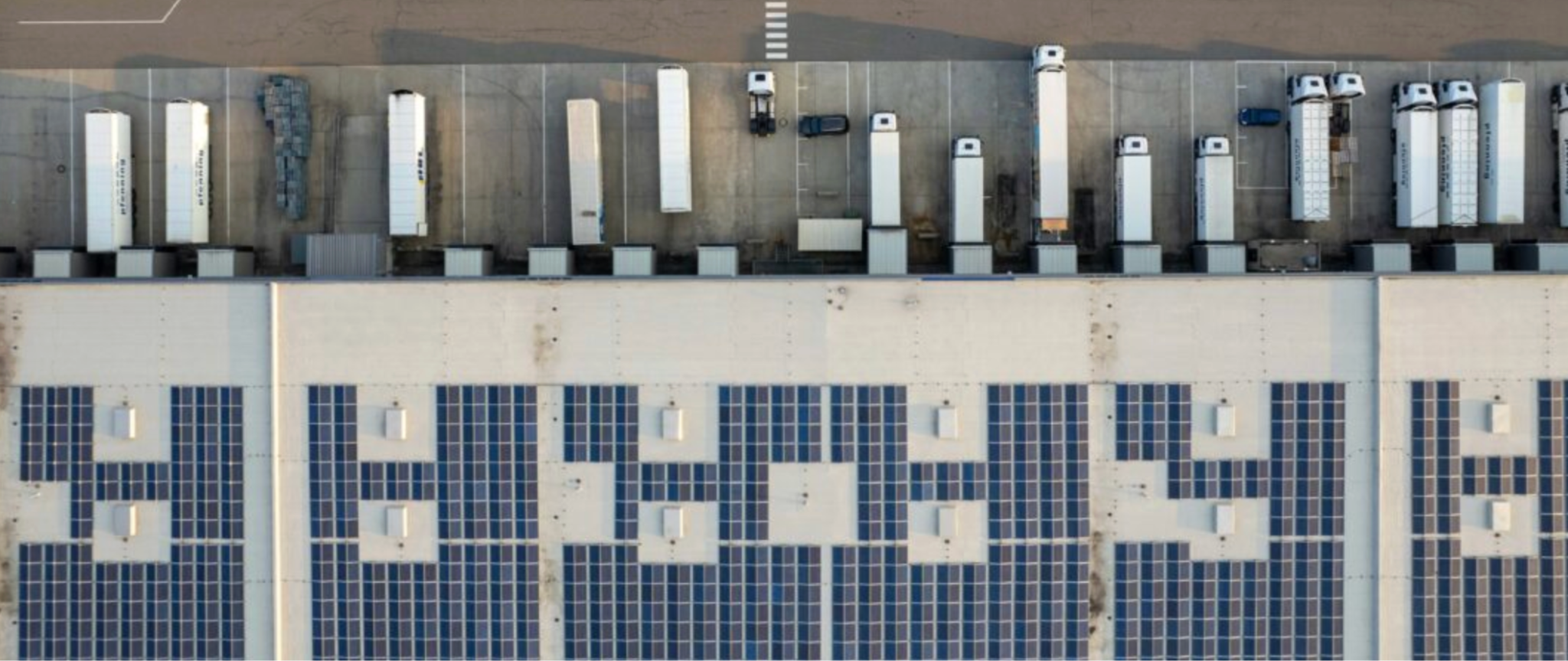
An 85,000 square foot light industrial and logistics building in a Hertfordshire logistics park, about 35 kilometers north of central London. Built in 2005. EPC D at acquisition. At 7,897 square meters, the asset sits well above the 1,000-square-meter threshold, so the 2031 EPC B requirement applies.
Acquisition price: £14.5 million at a going-in capitalization rate of 6.25%, producing Year-1 net operating income of £906,250. Interest-only debt at 5.75% in both stacks.
The conventional stack. 65% loan to value, £9,425,000 of debt, £5,075,000 of equity, which is 35% of price. Annual debt service: £541,938. Year-1 debt service coverage: 1.67x.
The climate-adjusted stack. 60% loan-to-value, £8,700,000 of debt. Purchase equity is £5,800,000, plus the ring-fenced certification reserve of £850,000. Total equity committed is £6,650,000, which is 45.9% of the price. The reserve is additional capital, not a reallocation, and the stack that shows it inside the purchase equity understates what the investor puts up.
Annual debt service: £500,250. Year-1 debt service coverage 1.81x. The reserve is built from the bottom up: lighting retrofit £85,000; air handling and heat recovery £195,000; a 250-kilowatt rooftop solar array at about £1,280 per kilowatt installed, for £320,000; building management system upgrade £95,000; and certification and audit fees £35,000. That is £730,000, plus a 15% contingency of £109,500, for £839,500, rounded to £850,000. The solar unit cost is an assumption rather than a sourced benchmark, and it sits above quoted installer pricing at this scale - see Sources.
The Year-3 event is the key point to watch. After the D-to-B upgrade, the asset is certified, and net operating income rises to £960,000, driven by utility savings from the solar array and the plant works.
Valuing the certified asset at 5.50%, the capitalization rate assumed for the wider buyer pool that a B-rated asset reaches, it is worth £17,454,545. A 70% loan against that is £12,218,182, which repays the original £8.7 million and returns £3,518,182 of equity in Year 3.
That is roughly double what a model produces if it applies the green capitalization rate at exit but leaves the Year 3 refinancing valued at the old rate.
The same certified asset cannot carry two capitalization rates four years apart without a stated reason, and applying the premium consistently favors the sponsor.
The refinanced loan is priced at 5.50%, which is the 5.75% conventional rate less a 25-basis-point sustainability-linked adjustment. That adjustment reflects observed market practice on the instrument commercial property actually borrows in, not published guidance: documented UK mid-market ratchets run 2.5 to 15 basis points, so 25 is the optimistic tail—annual debt service: £672,000.
Year-7 exit at the same 5.50% on £960,000 of net operating income: £17,454,545. No further compression is assumed between Year 3 and Year 7.
Underwriting Analysis
Levered internal rate of return over seven years: 7.18% conventional, 11.01% climate-adjusted. A difference of 384 basis points. Both stacks hold the capitalization rate flat from acquisition to exit, so the conventional asset exits at the 6.25% it went in at. Year-3 debt service is charged at the post-refinancing £672,000 rather than the pre-refinancing £500,250, because the refinancing completes in that year. Report it levered, and only levered. Two of the three sources of advantage in this structure are the refinancing proceeds and the reduced interest cost, and neither of those can appear in an unlevered return by construction. A model that quotes an unlevered figure and then credits it to a financing spread isn’t accurate.
Watch the certified capitalization rate. Holding everything else constant, the climate-adjusted levered return runs 14.40% at a 5.00% certified cap, 11.01% at 5.50%, 9.51% at 5.75%, and 8.12% at 6.00%. Above a certified cap of about 6.18%, the climate-adjusted stack returns less than the conventional one. The entire case for spending £850,000 and accepting lower leverage collapses if the certified asset does not actually clear at a tighter yield than the uncertified one.
The financing spread is close to irrelevant. Moving the sustainability-linked adjustment from 0 to 50 basis points changes the levered return by 67 basis points, from 10.68% to 11.35%. Moving the certified capitalization rate by the same 50 basis points, from 5.50% to 6.00%, is worth 289. The greenium is the argument sponsors lead with, and it is worth roughly a quarter of what the capitalization rate assumption is worth.
If you take one thing from these observations, take that inversion. The deal is a bet on the exit buyer pool. It is not a bet on cheap green debt. So what’s the smart play?
Test the certified cap rate against comparables before anything else. Ask the agent for B-rated and D-rated industrial transactions in the same corridor within the last twelve months. If the spread between them is under 25 basis points, this structure does not work at any financing rate.
Model the certification timeline against the refinancing window, not against 2031. With the compliance deadline at 2031, the binding constraint is your own refinancing date. Target certification six to twelve months before the window opens, because a delayed certificate means refinancing into the conventional rate and the conventional valuation.
Size the reserve as a covenant, not a budget line. A capital expenditure budget can be cut under pressure. A ring-fenced tranche inside the stack cannot, and a lender providing certification-conditioned financing will require it as a condition anyway.
Check which side of 1,000 square meters each unit sits on. For a multi-let estate, the regime now applies unevenly across the same title. That changes the work schedule and which units carry a lettability risk in 2031.
An assumption I’ve discussed previously in the standard climate-adjusted template does not hold up under scrutiny in this asset class. Insurance stress is usually the reason to hold DSCR headroom, and for a Sun Belt multifamily deal it is decisive. Here it is not.
This model assumes UK light industrial insurance of roughly £0.30 to £0.35 per square foot, so about £25,500 to £29,750 a year on this asset. That range rests on an assumption. Grow it at a 15% compound annual rate, which is aggressive, and by Year 5 it reaches roughly £44,600 to £52,000. The increase is about 2% of net operating income.
Year-5 coverage falls to about 1.64x conventional. On the climate-adjusted stack, Year-5 coverage has to be measured against post-refinancing debt service of £672,000 rather than the pre-refinancing £500,250, which puts it at about 1.40x. Neither is near a covenant. The insurance line is simply too small a share of income in UK light industrial for even a severe repricing to threaten coverage.
The Year-5 risks in this deal are certification slippage and the refinancing market, and they deserve the sensitivity table that insurance usually gets.
Strategic Implications
The regulatory argument and the return argument have separated. Until June, the two ran together, and a sponsor could justify certification capital by pointing at a deadline. With the new deadline moved out four years, the spend has to earn its place on return alone between now and then. Some deals will not clear that test, and finding out now is cheaper than finding out in Year 3.
Certification is a buyer-pool decision, which is why the capitalization rate carries the model. Brief 20 found the same structure in Sydney, where a NABERS threshold decides which tenants may sign rather than what rent they pay. Brief 15 found it in the Netherlands. The asset below the line is not discounted in the comparables because the bid that was never made leaves no record. That is what a certified capitalization rate measures, and it is why it must be evidenced rather than assumed.
Physical risk certification is an emerging practice, not a lender condition. ASTM E3429-24, the Standard Guide for Property Resilience Assessments published in 2024, is increasingly described as the Phase I of climate risk. It is a voluntary guide. No lender is on record requiring it. Treat it as cheap optionality you can produce before you are asked, rather than as a box a 2026 refinancing will require.
Certification-linked mezzanine remains a nascent category. A product structured with a preferred return and participation in refinancing upside would solve the equity sizing problem this stack creates, since 45.9% is a heavy commitment. While Germany’s KfW has long operated energy-efficiency lending, though not in this structure, nobody in the UK currently does this, so the point here is to track the category.
As always, KNOW YOUR SIGNALS and BE CLIMATE READY!
Jamie
Run this on your own deal
The CRDF Deal Stress Test™ built for this brief takes a sub-threshold asset and tests the certification spend against the exit capitalization rate rather than against the financing spread. Free, no signup: Brief 23_ CRDF Deal Stress Test™ (xlsx)
New to the framework? The blank master CRDF Signal Tracker™ and Deal Stress Test™ workbooks are at climatereadyre.com/tools.
Related briefs
Same signal (S2 Credit & Mortgage Markets):
Brief 22 · CMBS Spreads & Climate Risk: 77bp and 56bp per Point of Exposure - coming soon
Brief 10 · Bank Lending Criteria and Climate Risk on Property: The New Overlays - coming soon
Next in sequence:
Brief 24 · Long-Duration Real Estate Funds: Medellin’s 15-Point Line H Housing Shift - coming soon
Sources
Every figure above, with the date the data covers, the date it was published, and the date I verified it.
UK non-domestic MEES position — EPC B proposed from 2031 for buildings over 1,000 square meters where cost-effective; EPC E retained below 1,000 square meters; the proposed 2027 EPC C milestone dropped and will not be taken forward. The primary is an interim response using the words it is proposed, not a confirmed obligation.
UK Government — Minimum Energy Efficiency Standards (MEES) in the non-domestic private rented sector: interim response · Data as of Jun 18, 2026 · Published Jun 18, 2026 · Accessed Aug 2026
Existing exemptions and cost-effectiveness tests remain in place. Corroborated by law firm summaries published the same week.
Sustainability-linked margin adjustment — 25 basis points, the figure used in this model; documented UK mid-market ratchets run 2.5 to 15 basis points.
Loan Market Association — Sustainability Linked Loan Principles · Data as of 2019 · Published Sep 2019 · Accessed Sep 2026
The Sustainability Linked Loan Principles contain no numeric margin figure at all — they state only that the margin may be reduced when targets are met — so the 25 basis points used here is not sourced to Loan Market Association guidance. It reflects observed market practice, and against the documented 2.5 to 15 basis point UK mid-market range, it is the optimistic tail. This is the instrument commercial property borrows in; the labeled green bond premium is a separate, now-negligible figure, see Brief 22.
Rooftop solar installed cost — £1,280 per kilowatt for a 250 kW array, £320,000 inside the modeled reserve.
Unsourced assumption — no UK government benchmark exists at this scale. Nearest published series: UK Government (DESNZ) — Solar PV Cost Data · Data as of installations up to 50 kW only · Published date not stated · Accessed Sep 2026
DESNZ Solar PV Cost Data bands stop at 50 kW, and Electricity Generation Costs 2025 covers only installations above 5 MW, explicitly excluding rooftop, so neither supports a 250 kW figure. Quoted installer pricing for 150 to 250 kWp runs roughly £750 to £850 per kW, which would put the array nearer £190,000 and the reserve nearer £690,000; the modeled reserve is left at £850,000 pending that decision.
ASTM E3429-24 — Standard Guide for Property Resilience Assessments, published 2024.
The National Law Review — Property Resilience Assessments and ASTM Standard E3429-24: A Potential New Due Diligence Standard · Data as of 2024 · Published 2024 · Accessed Aug 2026
A voluntary guide, cited here through a legal summary rather than the standard itself. No lender is named as requiring it, and its adoption timeline is a forecast rather than a policy.
Hertfordshire light industrial capital stack — 85,000 square feet, £14.5M at a 6.25% going-in cap, Year-1 net operating income £906,250; conventional 65% LTV (£9,425,000 debt, £541,938 debt service, 1.67x coverage) against climate-adjusted 60% LTV (£8,700,000 debt, £500,250 debt service, 1.81x coverage) plus an £850,000 ring-fenced certification reserve; total equity £5,075,000 against £6,650,000.
CRREI — modeled scenario, Brief 23 CRDF Deal Stress Test™ · Method: two stacks on identical income and interest assumptions, differing in leverage, reserve, and exit capitalization rate; reserve built bottom-up from component costs plus 15% contingency · Assumptions as of July 2026 · Modeled July 2026 · Modeled — not a specific asset
The solar line inside the reserve is an unsourced assumption; see the rooftop solar entry above.
Year-3 refinancing and seven-year return — certified value £17,454,545 at a 5.50% capitalization rate, 70% loan of £12,218,182, refinanced debt service £672,000, equity recapture £3,518,182; levered internal rate of return 7.18% conventional against 11.01% climate-adjusted.
CRREI — modeled scenario, Brief 23 CRDF Deal Stress Test™ · Method: certified capitalization rate applied consistently at refinancing and exit; financing spread taken at 25 basis points from observed market practice; returns computed levered because two of the three sources of advantage are financing effects; the conventional stack exits at the flat 6.25% going-in rate with no compression, and Year-3 debt service is charged post-refinancing · Assumptions as of July 2026 · Modeled July 2026 · Modeled — not a specific asset
Both returns reproduce from the inputs above. The conventional stack exits at a flat 6.25%, the same rate it goes in at, which matches the no-further-compression assumption stated for the climate stack. Year-3 debt service is charged at the post-refinancing GBP672,000, because the refinancing completes in that year. Net operating income is held flat within each stack, at GBP906,250 conventional and GBP960,000 climate-adjusted from Year 3.
Sensitivity to the certified capitalization rate — levered return of 14.40% at 5.00%, 11.01% at 5.50%, 9.51% at 5.75% and 8.12% at 6.00%; the financing spread moves the return by 67 basis points across a range of zero to 50 basis points, from 10.68% to 11.35%.
CRREI — modeled scenario, Brief 23 CRDF Deal Stress Test™ · Method: single-variable sensitivity holding income, leverage, and reserve constant · Assumptions as of July 2026 · Modeled July 2026 · Modeled — not a specific asset
Above a certified capitalization rate of about 6.18%, the climate-adjusted stack returns less than the conventional one. The structure bets on the exit buyer pool.
UK light industrial insurance cost and Year-5 coverage — assumed at £0.30 to £0.35 per square foot, about £25,500 to £29,750 a year on an 85,000 square foot building, reaching roughly £44,600 to £52,000 by Year 5 at a 15% compound annual growth rate; Year-5 coverage about 1.64x conventional and about 1.40x climate-adjusted.
Unsourced assumption, applied within a CRREI modeled scenario — no named dataset located · Method: assumed range applied to the modeled asset, grown at a stated compound rate; climate-adjusted coverage measured against post-refinancing debt service of £672,000 · Assumptions as of July 2026 · Modeled July 2026
The per-square-foot unit is non-standard: UK commercial property insurance is rated on reinstatement value per £1,000 sum insured, not per square foot, and this range could not be traced to DESNZ, ABI, RICS, or BCIS material. Replace it with a rate-on-value against reinstatement cost, or a per-square-foot figure from a dated service-charge benchmarking dataset, before relying on the line. The Year-5 increase is about 2% of net operating income; insurance repricing does not threaten coverage in this asset class at this scale.
Commentary and analysis only. Not investment, financial, legal, tax, or professional advice. CRDF tools are illustrative; examples are composites drawn from public data. Do your own due diligence and consult qualified professionals.
I run this analysis on specific deals. If you are weighing certification capital on a UK asset and want the exit capitalization rate assumption tested against real comparables before you commit, book 20 minutes.
Jamie Wolf, MBA — Founder & Publisher, Climate-Ready Real Estate Investing, © 2026, CR REI Holdings LLC